13.3 Origin and destination positions
Each lifting task must be defined by two main positions: the load's origin and destination. The origin is the initial position from which the load is picked up or begins to be raised, whereas the destination is the final position where the load is placed or reaches the endpoint of the lift.
In Ergoniza Intelligent, these positions can be defined manually on the three-dimensional model or by capturing postures with artificial intelligence. They characterize the load's location relative to the worker (Figure 68).
The Revised NIOSH Lifting Equation recognizes that conditions at the origin and destination may differ. Ergoniza Intelligent calculates and displays the corresponding factors for both points. However, the destination can determine the task result only when significant control of the load is required at that point.
The horizontal distance expresses the load's distance from the worker's body. The vertical height indicates the load's position relative to the floor. Lifts performed from very low positions or to very high positions are usually less favorable than lifts performed near the method's reference height.
The vertical travel distance is the difference in height between the origin and destination. This value accounts for the lift's vertical range. Asymmetry, in turn, accounts for whether the lift involves rotation or deviation from the worker's frontal plane. Asymmetric lifts reduce the Recommended Weight Limit because they create less favorable conditions than a symmetrical lift performed in front of the body.
The system displays the results associated with the origin and destination to facilitate review of the movement. When Significant Control of the Load Is Required at the Destination is enabled, both endpoints are compared and the task adopts the lower RWL and the higher resulting LI. When it is disabled, the task result is determined solely from the origin; destination results are retained as descriptive information but cannot govern the task index.
This setting is stored independently for each task. Therefore, in a multitask analysis, significant control at the destination may be required for some tasks but not for others.
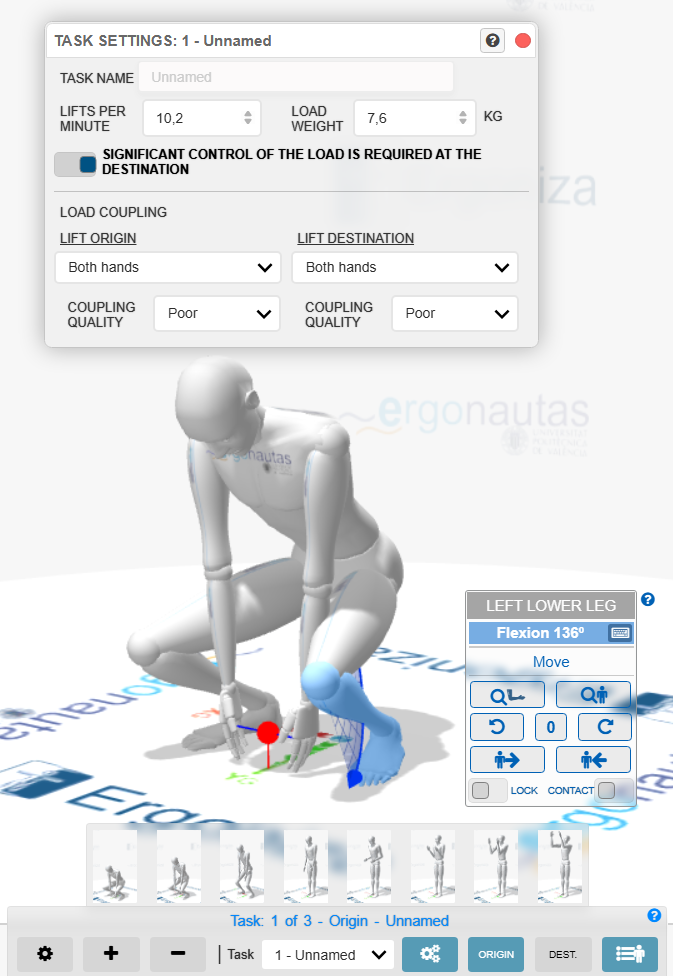
Figure 68: Defining lift origin and destination.
When the load position, the worker's posture, or any task parameter is changed, the results are updated automatically.