14.4.1 Adapting MVNX data to the Ergoniza Intelligent model
As explained in Section 5.1.4, the forearm and lower-leg segments of the Ergoniza Intelligent model have one degree of freedom (flexion/extension). Radioulnar rotation and tibiofibular rotation are delegated to the next segment in the kinematic chain—the hand for the forearm and the foot for the lower leg. Forearm flexion relative to the upper arm must therefore occur in the plane formed by the shoulder, elbow, and wrist joints, and lower-leg flexion relative to the thigh must occur in the plane formed by the hip, knee, and ankle joints.
This is illustrated in Figure 74, which shows the forearm rotating about the elbow in a flexion movement. If there is no humeral rotation at the shoulder, all wrist positions over time (Mt1, Mt2, Mt3...) and the elbow and shoulder joints remain in the same plane.
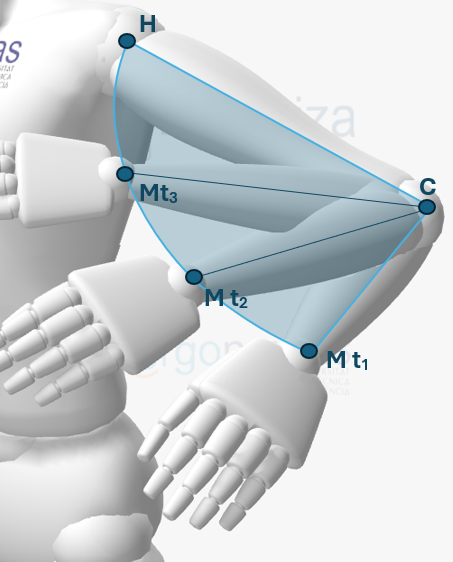
Figure 74: Plane of forearm flexion about the elbow.
When data are imported from MVNX files, the axial orientations of the upper arm and forearm—that is, their rotations about the longitudinal axis—are adapted to this requirement. The plane formed by the shoulder, elbow, and wrist is calculated, and the longitudinal axes of the upper arm and forearm are oriented so that the direction of forearm flexion lies in that plane. A similar procedure is applied to the thigh, lower leg, and foot.
When the forearm or lower leg is fully extended, the plane containing the corresponding joints cannot be determined because the joints lie on the same line. Therefore, when the forearm or lower leg is fully extended, the axial orientation of the upper arm is adopted for the forearm.
Finally, the inherent inaccuracy of inertial sensors can cause forearm or lower-leg extensions slightly greater than 180º to be recorded. In these cases, Ergoniza Intelligent corrects the forearm or lower-leg extension to 180º and notifies the user of the correction, as shown in Figure 73.